VigorHorse Official Website › Verify a batch
Verify a batchHow To Verify A VigorHorse Batch
The lot on the jar this website documents is VIG-26/GO-6654, and the certificate reference the distributor quotes is VIG-6654-26-GO. Both are filing references: they identify a production run and a paperwork entry. Neither is a laboratory result, and this desk publishes no test data because it holds none.
What the lot code is, what it proves, and what a real certificate would add.
What the VigorHorse batch record contains
Five fields, and the line between a reference and a result.
| Field | Value | What it establishes |
|---|---|---|
| Lot code | VIG-26/GO-6654 | Which production run a jar came from, so a question can be tied to a batch |
| Certificate reference | VIG-6654-26-GO | That a certificate entry exists under that reference with the distributor |
| Label revision | REV 05/26 | Which version of the artwork the jar carries, which is how a panel change is spotted |
| Facility statement | Produced in a GMP Facility | The manufacturer's own description of where it was made |
| Origin statement | Made in the USA with globally sourced ingredients | That the ingredients are sourced internationally and the product is made in the US |
All five are printed or supplied by the seller. None of them is a measurement, and this website does not present any of them as one.
The distinction that matters here is between a reference and a result. A lot code is an index: it lets a manufacturer find the paperwork for a run, and it lets a buyer say which run they have. A certificate of analysis is a document with figures in it, produced by a laboratory, naming methods and limits.
This desk holds the first and not the second. Saying so is more useful than implying otherwise, because a reader who knows which one they have been given can ask for the other.
The label revision row deserves a line of its own, because it is the field that settles the most arguments. Artwork changes: a panel is reformatted, a caution is reworded, an ingredient order is adjusted. A revision mark dates the version in your hand, which is what separates a genuine label change from a page on this website that has gone out of date.
The two statements at the bottom of the table are the manufacturer's own words rather than certifications. “Produced in a GMP Facility” and “Made in the USA with globally sourced ingredients” are printed on the jar, they are more precise than the flat roundels in the seller's artwork, and the testing and quality page audits both against the marks that travel with them.
Why a VigorHorse lot code is worth having at all
Four situations, and what changes when a run can be named.
Because it turns a jar into a member of a set. Without one, a complaint is one person's account of one container; with one, it is a question about a production run that a manufacturer can answer from its own records.
| The situation | With a lot code | Without one |
|---|---|---|
| A jar tastes or looks wrong | The desk can ask whether other jars from the same run were reported | One report, no pattern, and nothing to compare it against |
| A panel differs from the artwork on this website | The code dates the jar, so a label revision is the obvious first explanation | No way to tell a revision from a mistake |
| A jar arrives as a single block | A heat problem can be traced to a shipment as well as to a run | A replacement, and no information for anyone else |
| A problem is reported to a regulator | The run is identifiable, which is the whole basis of a recall | Nothing is identifiable, which is why lot codes are standard practice |
None of these scenarios requires a test result. They require an index, and an index is exactly what a lot code is.
That is the fair account of what VIG-26/GO-6654 gives a buyer. It is not proof of anything about the contents, and it is genuinely useful, and both of those are true at once. A jar with no code at all would be the finding worth worrying about, and this one is not that.
How to verify the VigorHorse jar you received
Five checks, in the order a jar presents them.
Find the lot code on the label
It is printed on the jar. This website documents VIG-26/GO-6654; a different code is entirely normal and simply names a different run. What would be worth reporting is no lot code at all.
Check the seal under the cap
The label asks for it explicitly: do not use if the seal under the cap is broken or missing. That is the one check that has to happen before the jar is opened rather than after.
Read the panel against this website
Six rows, one blend line, nine names beneath it, and the caffeine entry carrying 5 mg. The panel page prints every row in the label's own order.
Count the gummies and check the format
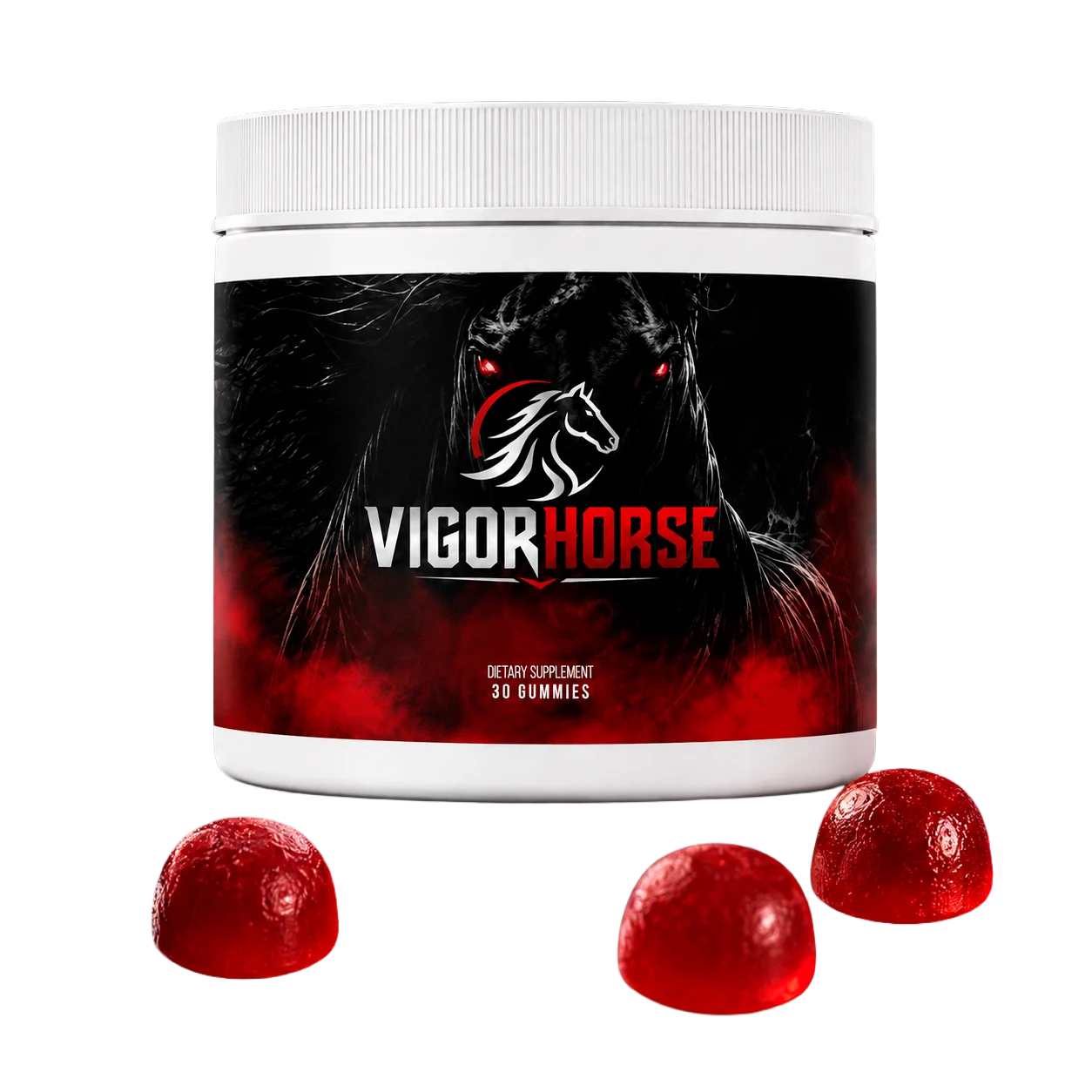
30 gummies in a wide jar. The pack ladder calls them bottles and the container is a jar, which is a wording difference rather than a discrepancy.
Ask the desk for the certificate reference
The order desk on +1 (302) 200-3480 can confirm what the distributor holds against a lot. Asking is free, and the answer tells you what kind of record exists.
What to do if a VigorHorse jar does not match
Four findings, and where each one goes.
The panel differs from this website
Photograph it and send the photograph to [email protected]. A label revision is the commonest honest explanation, and this website is corrected and re-dated when one is confirmed. The jar in your hand governs, not this page.
The seal is broken or missing
Do not take it. Ring the order desk with the order ID; that is a replacement conversation and it is usually settled in one call.
There is no lot code at all
Report it to both desks. A missing lot code is the one finding on this list that says something about the jar rather than about the paperwork, because traceability is what the code exists for.
The jar came from somewhere other than the checkout
None of the above applies in the same way. A third-party jar has no order record behind it, and the where-to-buy page sets out what that costs.
What a full VigorHorse certificate of analysis would carry
Six lines a real certificate carries, and the one that matters most here.
- The name and address of the testing laboratory, and the date it ran the work.
- The lot code it tested, matching the code on the jar rather than a reference number supplied separately.
- The methods used, named specifically, because a method decides what a result means.
- Identity confirmation for each botanical, which is the check that would settle the catuaba species question on the ingredients page.
- Heavy metals, microbial counts and the limits each result is measured against.
- A screen for undeclared pharmaceutical analogues, which is the documented hazard in this category rather than a hypothetical one.
That last line is the one worth asking about. The adulteration survey, a 2022 screening study and the analysis of FDA warning letters all describe the same pattern in this aisle, and a screen for it is the single most useful line a certificate in this category could carry.
Publishing that list is not an accusation. It is a description of what would answer the question completely, so that a reader can tell how far a reference number gets them and what to ask for next.
It is also a list worth carrying to any product in this aisle rather than to this one alone. A jar that publishes a document with a laboratory name, a date, a method and a limit on it has answered questions nobody else in the category is answering, and that is a fair thing to reward.
VigorHorse batch questions
What is the VigorHorse lot number?
The jar this website was written from carries VIG-26/GO-6654. Your jar may carry a different code, which simply names a different production run.
Does VigorHorse publish a certificate of analysis?
The distributor quotes a certificate reference, VIG-6654-26-GO. This desk has not been given a document with test results in it, and it does not publish one it does not hold.
Is a lot code proof of testing?
No. A lot code is an index to a production run. It makes a question traceable, which is worth having, and it is a different thing from a measurement.
What if my jar has a different lot code?
That is normal. Codes change with every run. What is worth reporting is a missing lot code, or a panel that differs from the one printed on this website.
Who do I report a VigorHorse label problem to?
Send a photograph to [email protected] for the page to be corrected, and ring the order desk on +1 (302) 200-3480 if the jar itself needs replacing.
Sources behind the VigorHorse batch checks
The adulteration and identity literature behind the certificate section.
- Campbell N, Clark JP, Stecher VJ, et al. Adulteration of purported herbal and natural sexual performance enhancement dietary supplements with synthetic phosphodiesterase type 5 inhibitors. J Sex Med. 2013;10(7):1842-9. PMID 23634714. https://pubmed.ncbi.nlm.nih.gov/23634714/
- Jairoun AA, Al-Hemyari SS, Shahwan M, et al. Screening and Determination of Synthetic PDE-5 Inhibitors in Adulterated Sexual Enhancement Supplements. Molecules. 2022;27(19):6604. PMID 36235271. https://pubmed.ncbi.nlm.nih.gov/36235271/
- Tucker J, Fischer T, Upjohn L, et al. Unapproved Pharmaceutical Ingredients Included in Dietary Supplements Associated With US Food and Drug Administration Warnings. JAMA Netw Open. 2018;1(6):e183337. PMID 30646238. https://pubmed.ncbi.nlm.nih.gov/30646238/
- Kletter C, Glasl S, Presser A, et al. Morphological, chemical and functional analysis of catuaba preparations. Planta Med. 2004;70(10):993-1000. PMID 15490329. https://pubmed.ncbi.nlm.nih.gov/15490329/
Order VigorHorse and check the jar against this page
A printed panel, a published lot, a named facility and 60 days from the date of purchase to change your mind.
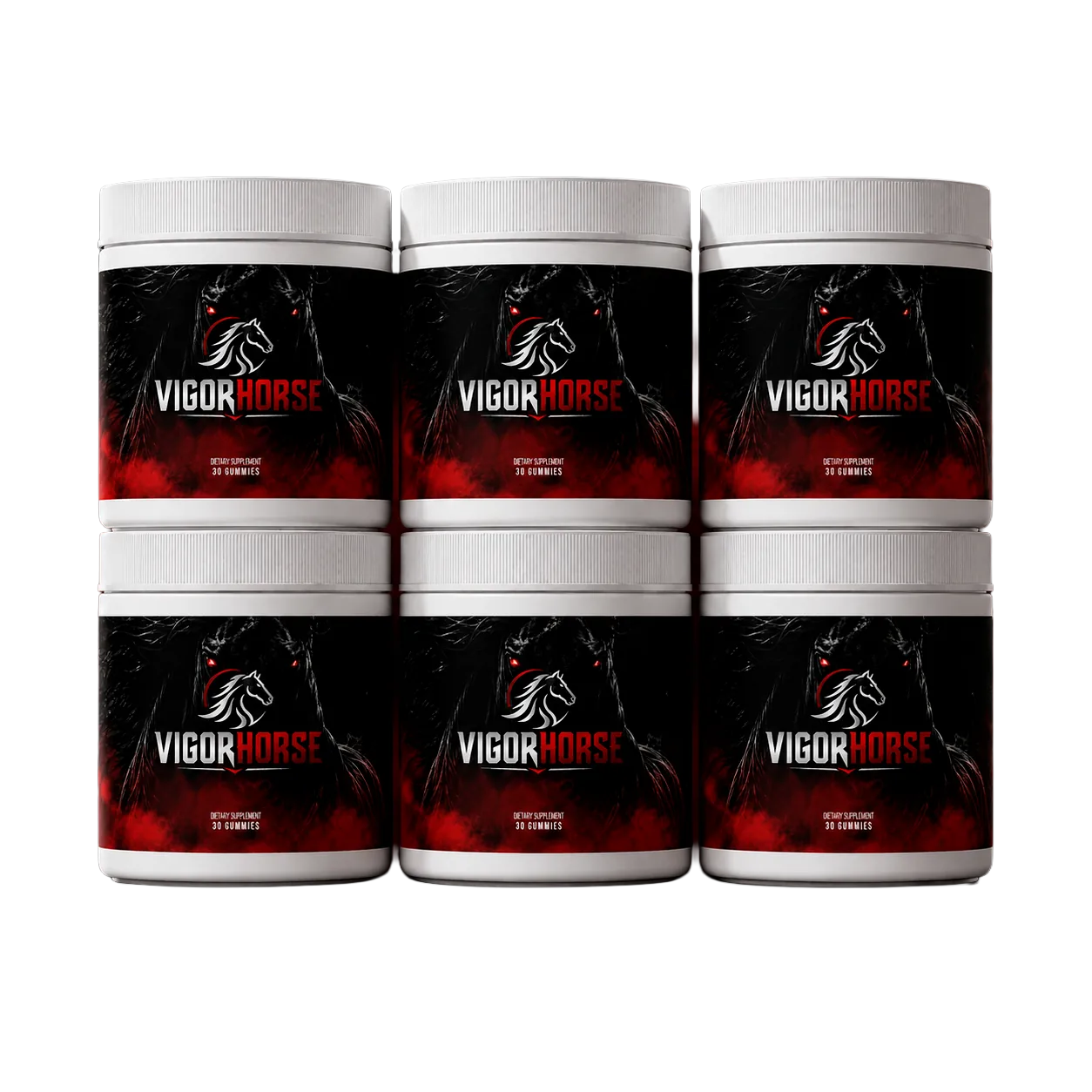
One bottle $89 · six bottles $294 · 60-day money-back guarantee
Order VigorHorse On The Official WebsiteOne gummy a day · 30 per jar · lot VIG-26/GO-6654