VigorHorse Official Website › Male Vitality Supplement Guide
Male Vitality Supplement GuideMale Vitality Supplement Guide: What The Evidence Shows
Nine ingredients carry almost this entire aisle, and their evidence records differ wildly. L-arginine has a meta-analysis with a working dose range. Tribulus has one positive trial and a second showing it moves no hormone. Maca has repeatable desire results and no hormonal explanation. Two of the nine have never been tested in men at all. Here is each record, with the amounts.
Every dose below was read out of the trial abstract, not recalled, and every claim links to the paper that carries it.
What this aisle is actually selling
Nine names, one supply chain, and nine very different research records.
Walk the male vitality shelf and the same nine or ten names recur: maca, tribulus, horny goat weed, muira puama, catuaba, ashwagandha, L-arginine, green tea, and caffeine somewhere near the bottom. The packaging varies enormously. The ingredient list barely does.
That convergence is not evidence of a consensus. It is a supply chain. These are the botanicals a contract manufacturer can source in bulk, blend, and put a label on without a new safety file, and the reason they recur is commercial rather than clinical. It is still worth knowing which of them have been tested and what happened, because the answers are genuinely different from one row to the next.
One thing is worth fixing in your head before the ingredient sections: the amount matters more than the name. An ingredient with an excellent trial behind it is doing nothing at a hundredth of that trial's dose.
L-arginine has the clearest dose-response in the category
The best-supported ingredient in the aisle, and the one with the largest gap between trial dose and label dose.
If one ingredient in this aisle has earned its place, it is L-arginine, and the reason is mechanistic rather than traditional. Arginine is the substrate the body converts into nitric oxide, and nitric oxide is the signal that relaxes the smooth muscle lining blood vessels. That is the same pathway the prescription drugs in this area work on, from a different point along it.
The original crossover trial gave 5,000 mg a day for six weeks and found the improvement was concentrated in men whose baseline nitric oxide output was already low. That is a useful finding and an inconvenient one for marketing: it suggests the ingredient corrects a deficit rather than adding a capability.
The 2019 meta-analysis is the reference most worth reading. It pooled the available trials and found a benefit over placebo, and it attached a range to that benefit: between 1,500 and 5,000 mg a day. Below that range the pooled data has nothing to say.
Two practical notes. Oral arginine's pharmacokinetics are unhelpful, with substantial first-pass metabolism meaning a swallowed gram is not a gram delivered. And oral arginine lowers blood pressure in pooled analysis, with a dose relationship behind it, which is worth raising with whoever prescribes your antihypertensives before you add a gram or three a day on top.
| Trial | Daily amount | Duration | What it reported |
|---|---|---|---|
| Chen and colleagues, crossover | 5,000 mg | 6 weeks | Improvement confined to the men whose nitric oxide output was low at the start |
| Rhim and colleagues, meta-analysis | 1,500–5,000 mg | Pooled | A benefit over placebo within that range, with the caveat that the pooled trials were small |
| Stanislavov and Nikolova | 1,700 mg, with pycnogenol | 3 months | A combination result, so arginine's own share of it was never separated |
| Barbonetti and colleagues, network analysis | Varies by arm | Pooled | Arginine-family compounds ranked among the better-supported options in the aisle |
Blood pressure is the reason the dose ceiling matters. Pooled analyses find oral L-arginine lowers both systolic and diastolic pressure, which is a wanted effect for some readers and an unwanted one for anybody already on medication for it.
Tribulus: one positive trial, and a mechanism that did not survive testing
A positive trial at six tablets a day, and a hormonal premise that tested negative.
Tribulus terrestris is sold on a testosterone story, so it is worth separating the story from the result, because they point in different directions.
The result first. Kamenov and colleagues ran a randomised, double-blind, placebo-controlled trial at 1,500 mg a day, taken as six 250 mg tablets, and reported improvement in both erectile function and sexual desire scores. That is a real trial with a real result and the dose is specific: six tablets a day, not one.
Now the story. Neychev and Mitev tested the hormonal premise directly in young men and found tribulus did not influence androgen production. So whatever the Kamenov result is, the testosterone explanation printed on the front of the boxes is not it.
A later placebo-controlled trial at a lower daily amount did not reproduce the benefit, and a 2025 review of tribulus supplementation reads the literature as mixed rather than settled. The 2026 meta-analysis is the most recent word and it is cautious about the size of any effect.
One safety note that rarely makes the marketing. A published case report describes severe nephrotoxicity in a patient taking tribulus. A single case report is not a population risk, but it is the reason anybody with kidney disease should treat this particular ingredient as a conversation rather than a purchase.
Maca produces desire results without a hormonal explanation
Repeatable subjective results at one and a half to three grams a day.
Maca is a Peruvian root vegetable eaten as food at high altitude, which gives it a different safety profile from most of this shelf. Its research record is modest, repeatable, and honest about its own limits.
The Gonzales trial gave 1,500 mg or 3,000 mg a day for twelve weeks and reported improved sexual desire at both amounts. The detail that makes it worth citing is negative: serum testosterone and oestradiol were measured and did not change. A supplement that improves a subjective outcome without moving the hormone it is marketed on is telling you the marketing is wrong, not that the result is.
A later trial at 2,400 mg a day for twelve weeks found subjective improvement on questionnaire scores in men with mild dysfunction. The systematic review that pooled this work described the evidence as limited and the trials as small, which is the fair summary.
The number to carry away is the dose. Every maca result in the literature sits between 1,500 and 3,000 mg a day, sustained for around three months. That is one and a half to three grams, daily, of a single ingredient.
| Trial or review | Daily amount | Population | Finding |
|---|---|---|---|
| Gonzales and colleagues | 1,500 mg and 3,000 mg | Adult men, 12 weeks | Sexual desire improved at both amounts, with no change in testosterone or oestradiol |
| Zenico and colleagues | 2,400 mg | Men with mild dysfunction, 12 weeks | Subjective improvement on questionnaire scores |
| Shin and colleagues, systematic review | Varies | Pooled | Limited evidence, with the trials judged small and methodologically weak |
| Lee and colleagues, semen review | Varies | Pooled | Semen quality parameters reviewed separately, with a similar caution on trial size |
The Gonzales result is the interesting one precisely because the hormones did not move. Whatever maca does here, it is not doing it by raising testosterone.
Ashwagandha holds the strongest single result on this shelf
675 mg a day for ninety days, and two liver case series worth knowing about.
Ashwagandha is the ingredient in this aisle with the most convincing controlled data, and the gap between its trial dose and its typical label dose is correspondingly the most striking.
Ambiye and colleagues gave 675 mg a day of root extract, split across three doses, for ninety days, and reported improvement in semen parameters and serum testosterone in oligospermic men. That is the strongest result any single ingredient on this shelf has produced, and 675 mg a day for three months is what it cost.
The stress trial ran 240 mg a day for sixty days and reported reductions in cortisol and in anxiety scores. A later crossover study looked specifically at hormonal outcomes in men, and a meta-analysis has since pooled the sexual-function work. One smaller trial tested it in erectile dysfunction specifically and was less encouraging.
Against that, two case series. One from the United States and one from India both describe liver injury associated with ashwagandha supplements. The LiverTox monograph gathers the picture, and the NCCIH summary is the plain-language version. The signal is uncommon and it is real, and it is a reason to stop and get advice if jaundice, dark urine or unexplained fatigue appear.
Icariin inhibits the right enzyme and has never been tested in a man for this
Real enzyme inhibition in glassware, and no human trial for this use at any dose.
Horny goat weed is the most scientifically interesting ingredient in the aisle and the one most often oversold, and both facts come from the same finding.
Dell'Agli and colleagues showed that icariin, the flavonoid behind the plant's reputation, is a potent inhibitor of human phosphodiesterase-5. That is the same enzyme the prescription drugs in this area inhibit. The mechanism is genuinely shared, which is why the comparison keeps getting made.
The comparison then falls apart on potency and on delivery. Icariin's half-maximal inhibitory concentration in that work was 5.9 micromolar, some four orders of magnitude weaker than sildenafil's. Follow-up work explored the same activity in vitro. The compounds that came close to matching a prescription drug were synthetic derivatives of icariin made in a laboratory, not icariin itself, and not anything sold in a jar.
The pharmacokinetic study is the part that settles it. Prenylflavonoids taken by mouth reach low plasma concentrations, so the concentration that inhibited the enzyme in glassware is not the concentration a swallowed capsule produces in tissue. The one placebo-controlled human trial of the compound ran in a different condition entirely.
A systematic review of the genus covers traditional uses, chemistry and toxicology together and is the best single starting point if you want the whole picture rather than the headline.
Muira puama and catuaba are the two the literature never reached
Two of the most common names in the aisle, and the least to say about either.
These two are on almost every label in the category and they have the thinnest records in it, which is worth stating plainly rather than leaving to be inferred from an absent citation.
Muira puama's human literature amounts to one open-label study in 202 women of a combination product containing ginkgo as well. The rest is preclinical: work in rat tissue on a blend of ginger, citrulline and muira puama, a follow-up in aging rats, central nervous system effects in rodents, and a chemical characterisation of the plant.
Catuaba has a problem before the evidence question is reached. Kletter and colleagues analysed fourteen commercial catuaba samples and found most were not the plant their own labels named, because several species travel under the one trade name. What exists beyond that is relaxation of isolated rabbit tissue, antioxidant and antifatigue effects in mice and neuroprotection work. None of it is a person.
| Ingredient | Human evidence for male vitality | What exists instead |
|---|---|---|
| Muira puama (Ptychopetalum olacoides) | No controlled trial in men at any dose | One open-label questionnaire study in 202 women of a combination with ginkgo, plus rat and cell work on a ginger and citrulline blend |
| Catuaba (Trichilia catigua and others) | No human trial at all | Isolated rabbit tissue work, mouse behavioural studies, and neuroprotection assays |
Both appear on the majority of labels in this aisle. Neither has been given to a man in a controlled trial for the purpose it is sold for.
Green tea and caffeine are on the label for different reasons
Two ingredients whose numbers you can actually place against everyday intakes.
Green tea extract is rarely the reason anyone buys a male vitality product, and it is frequently the ingredient with the most published safety literature attached.
The United States Pharmacopeia review examined green tea extract and liver signals in detail and is the most thorough treatment available. Navarro and colleagues looked at catechins in dietary supplements and hepatotoxicity specifically. The NCCIH page is the readable summary. The case reports involve concentrated extracts at daily catechin intakes far above what a cup of tea supplies, which is the distinction that matters when you read the row on a label.
Caffeine is simpler and better characterised than anything else in this aisle. The standard review of caffeine and human health puts up to 400 mg a day for healthy adults in the range not associated with adverse effects. A 5 oz cup of ground roasted coffee is about 85 mg. Those two figures let you place any caffeine row on any label in about five seconds, which is more than can be said for the botanicals above it.
Added sugar on a chewable deserves the same arithmetic. The 2021 American Heart Association guidance and the cohort work on added sugar and cardiovascular mortality are the context for a row taken daily for months.
The category's real safety problem is not the botanicals
Prescription drugs found inside products sold as herbal, repeatedly, in published screening work.
Everything above concerns whether an ingredient works. The sharpest published risk in this aisle is a different question entirely: whether the ingredient in the jar is the ingredient on the label.
Campbell and colleagues documented adulteration of purported herbal and natural sexual performance products with prescription drugs. Screening work has found synthetic PDE-5 inhibitors and their analogues in products sold as herbal. An analysis of regulator warnings catalogued unapproved pharmaceutical ingredients in dietary supplements across years of notices.
This matters more than any efficacy question on this page. A man avoiding a prescription because of a nitrate he takes for his heart, who buys a herbal product instead, and whose herbal product contains an undeclared PDE-5 inhibitor, has walked into exactly the interaction he was avoiding, without knowing he did. The defence is unglamorous: buy from a seller with an address, a telephone number and a refund route, prefer a manufacturer that will name a testing laboratory, and treat any product promising a drug-like effect on a drug-like timescale as the most likely to be adulterated, since that promise is hard to keep with plants.
Why every product in this aisle says the same four words
Structure and function language, and what it does and does not permit.
Read ten male vitality labels and they will all say some version of “supports healthy circulation” or “supports male vitality”. That uniformity is legal architecture rather than coincidence.
A dietary supplement in the United States may make structure and function claims. It may say an ingredient supports a normal body function. It may not say the product diagnoses, treats, cures or prevents a disease, because a product that does that is a drug and is regulated as one. Erectile dysfunction is a diagnosable condition, so nothing sold on this shelf may claim to treat it.
The practical consequence is that the front of the box carries almost no information. Every product says the same thing because every product is required to. The information is on the back, in milligrams.
The NCCIH overview of dietary and herbal supplements and its Herbs at a Glance index are the two most useful non-commercial starting points for anyone who wants to check a claim independently.
What the clinical guidelines put ahead of any supplement
What the urological guidelines recommend, and the one intervention with the largest pooled effect.
No guide to this aisle is honest without the sentence the aisle exists to avoid: persistent difficulty with erections is a recognised clinical sign, and it has a work-up.
Pooled analysis associates erectile dysfunction with cardiovascular disease, which is why it is taken seriously as a marker rather than treated purely as a quality-of-life complaint. The vascular bed involved is narrower than the coronary bed, so it can register a problem earlier.
The American Urological Association guideline and the European Association of Urology guidelines both set out what an assessment involves, and neither recommends a botanical supplement as a first step. The MedlinePlus page is the plain-language version of the same material.
The lifestyle evidence is the part most worth acting on regardless of what else you decide: weight, activity and cardiovascular risk factor modification produced measurable improvement in pooled analysis. That is a larger documented effect than anything else on this page, and none of it makes a supplement a bad purchase. It makes one a second decision rather than a first.
The whole guide on one screen
Six statements and a table, for a reader who came for the doses.
- Four of these nine ingredients have a randomised controlled trial behind them, and every one of those trials used grams or hundreds of milligrams a day of a single substance.
- Two of the nine have never been given to a man in a controlled trial for this purpose, and one of those two is frequently the wrong plant in the first place.
- Icariin's PDE-5 inhibition is real, four orders of magnitude weaker than the prescription comparison, and has no human trial for this use behind it.
- The published risk with the best documentation in this category is adulteration with prescription drugs, not any of the botanicals.
- Lifestyle and cardiovascular risk modification has the largest pooled effect of anything on this page.
- Every label says “supports” because the law requires it, so the front of the box carries no information and the panel on the back carries all of it.
| Ingredient | Best human evidence | Daily amount that produced it |
|---|---|---|
| L-arginine | Meta-analysis of randomised trials | 1,500–5,000 mg |
| Ashwagandha root extract | Randomised controlled trial, 90 days | 675 mg |
| Maca root | Randomised trial, 12 weeks | 1,500–3,000 mg |
| Tribulus terrestris | Randomised controlled trial | 1,500 mg, as six tablets |
| Green tea extract | Safety literature rather than efficacy | Case reports from 140 mg EGCG upward |
| Caffeine | Extensive safety characterisation | Up to 400 mg is the healthy-adult ceiling |
| Icariin / horny goat weed | In vitro enzyme inhibition only | No human trial for this use |
| Muira puama | One open-label combination study in women | No controlled trial in men |
| Catuaba | Preclinical only | No human trial at all |
Read the third column as the cost of the second. An ingredient with an excellent trial behind it is not delivering that trial's result at a fraction of that trial's dose.
Who publishes this VigorHorse guide, and what it cites
Every dose quoted above was read from the trial abstract itself.
- Chen J, Wollman Y, Chernichovsky T, et al. Effect of oral administration of high-dose nitric oxide donor L-arginine in men with organic erectile dysfunction: results of a double-blind, randomized, placebo-controlled study. BJU Int. 1999;83(3):269-73. PMID 10233492. https://pubmed.ncbi.nlm.nih.gov/10233492/
- Rhim HC, Kim MS, Park YJ, et al. The Potential Role of Arginine Supplements on Erectile Dysfunction: A Systemic Review and Meta-Analysis. J Sex Med. 2019;16(2):223-234. PMID 30770070. https://pubmed.ncbi.nlm.nih.gov/30770070/
- Tangphao O, Grossmann M, Chalon S, et al. Pharmacokinetics of intravenous and oral L-arginine in normal volunteers. Br J Clin Pharmacol. 1999;47(3):261-6. PMID 10215749. https://pubmed.ncbi.nlm.nih.gov/10215749/
- Dong JY, Qin LQ, Zhang Z, et al. Effect of oral L-arginine supplementation on blood pressure: a meta-analysis of randomized, double-blind, placebo-controlled trials. Am Heart J. 2011;162(6):959-65. PMID 22137067. https://pubmed.ncbi.nlm.nih.gov/22137067/
- Shiraseb F, Asbaghi O, Bagheri R, et al. Effect of l-Arginine Supplementation on Blood Pressure in Adults: A Systematic Review and Dose-Response Meta-analysis of Randomized Clinical Trials. Adv Nutr. 2022;13(4):1226-1242. PMID 34967840. https://pubmed.ncbi.nlm.nih.gov/34967840/
- Stanislavov R, Nikolova V. Treatment of erectile dysfunction with pycnogenol and L-arginine. J Sex Marital Ther. 2003;29(3):207-13. PMID 12851125. https://pubmed.ncbi.nlm.nih.gov/12851125/
- Barbonetti A, Tienforti D, Antolini F, et al. Nutraceutical interventions for erectile dysfunction: a systematic review and network meta-analysis. J Sex Med. 2024;21(11):1054-1063. PMID 39279185. https://pubmed.ncbi.nlm.nih.gov/39279185/
- Kamenov Z, Fileva S, Kalinov K, et al. Evaluation of the efficacy and safety of Tribulus terrestris in male sexual dysfunction - A prospective, randomized, double-blind, placebo-controlled clinical trial. Maturitas. 2017;99:20-26. PMID 28364864. https://pubmed.ncbi.nlm.nih.gov/28364864/
- Neychev VK, Mitev VI. The aphrodisiac herb Tribulus terrestris does not influence the androgen production in young men. J Ethnopharmacol. 2005;101(1-3):319-23. PMID 15994038. https://pubmed.ncbi.nlm.nih.gov/15994038/
- Santos CA Jr, Reis LO, Destro-Saade R, et al. Tribulus terrestris versus placebo in the treatment of erectile dysfunction: A prospective, randomized, double blind study. Actas Urol Esp. 2014;38(4):244-8. PMID 24630840. https://pubmed.ncbi.nlm.nih.gov/24630840/
- Vilar Neto JO, de Moraes WMAM, Pinto DV, et al. Effects of Tribulus (Tribulus terrestris L.) Supplementation on Erectile Dysfunction and Testosterone Levels in Men - A Systematic Review of Clinical Trials. Nutrients. 2025;17(7):1275. PMID 40219032. https://pubmed.ncbi.nlm.nih.gov/40219032/
- Suharyani S, Amanda B, Angellee J, et al. Tribulus terrestris for management of patients with erectile dysfunction: a systematic review and meta-analysis of randomized trials. Int J Impot Res. 2026;38(1):11-18. PMID 40360723. https://pubmed.ncbi.nlm.nih.gov/40360723/
- Talasaz AH, Abbasi MR, Abkhiz S, et al. Tribulus terrestris-induced severe nephrotoxicity in a young healthy male. Nephrol Dial Transplant. 2010;25(11):3792-3. PMID 20667992. https://pubmed.ncbi.nlm.nih.gov/20667992/
- Gonzales GF, Cordova A, Vega K, et al. Effect of Lepidium meyenii (MACA) on sexual desire and its absent relationship with serum testosterone levels in adult healthy men. Andrologia. 2002;34(6):367-72. PMID 12472620. https://pubmed.ncbi.nlm.nih.gov/12472620/
- Zenico T, Cicero AF, Valmorri L, et al. Subjective effects of Lepidium meyenii (Maca) extract on well-being and sexual performances in patients with mild erectile dysfunction: a randomised, double-blind clinical trial. Andrologia. 2009;41(2):95-9. PMID 19260845. https://pubmed.ncbi.nlm.nih.gov/19260845/
- Shin BC, Lee MS, Yang EJ, et al. Maca (L. meyenii) for improving sexual function: a systematic review. BMC Complement Altern Med. 2010;10:44. PMID 20691074. https://pubmed.ncbi.nlm.nih.gov/20691074/
- Lee HW, Lee MS, Qu F, et al. Maca (Lepidium meyenii Walp.) on semen quality parameters: A systematic review and meta-analysis. Front Pharmacol. 2022;13:934740. PMID 36110519. https://pubmed.ncbi.nlm.nih.gov/36110519/
- Ambiye VR, Langade D, Dongre S, et al. Clinical Evaluation of the Spermatogenic Activity of the Root Extract of Ashwagandha (Withania somnifera) in Oligospermic Males: A Pilot Study. Evid Based Complement Alternat Med. 2013;2013:571420. PMID 24371462. https://pubmed.ncbi.nlm.nih.gov/24371462/
- Lopresti AL, Smith SJ, Malvi H, et al. An investigation into the stress-relieving and pharmacological actions of an ashwagandha (Withania somnifera) extract: A randomized, double-blind, placebo-controlled study. Medicine (Baltimore). 2019;98(37):e17186. PMID 31517876. https://pubmed.ncbi.nlm.nih.gov/31517876/
- Lopresti AL, Drummond PD, Smith SJ. A Randomized, Double-Blind, Placebo-Controlled, Crossover Study Examining the Hormonal and Vitality Effects of Ashwagandha (Withania somnifera) in Aging, Overweight Males. Am J Mens Health. 2019;13(2):1557988319835985. PMID 30854916. https://pubmed.ncbi.nlm.nih.gov/30854916/
- Arumugam V, Vijayakumar V, Balakrishnan A, et al. Effects of Ashwagandha (Withania Somnifera) on stress and anxiety: A systematic review and meta-analysis. Explore (NY). 2024;20(6):103062. PMID 39348746. https://pubmed.ncbi.nlm.nih.gov/39348746/
- Mamidi P, Thakar AB. Efficacy of Ashwagandha (Withania somnifera Dunal. Linn.) in the management of psychogenic erectile dysfunction. Ayu. 2011;32(3):322-8. PMID 22529644. https://pubmed.ncbi.nlm.nih.gov/22529644/
- Bjornsson HK, Bjornsson ES, Avula B, et al. Ashwagandha-induced liver injury: A case series from Iceland and the US Drug-Induced Liver Injury Network. Liver Int. 2020;40(4):825-829. PMID 31991029. https://pubmed.ncbi.nlm.nih.gov/31991029/
- Philips CA, Valsan A, Theruvath AH, et al. Ashwagandha-induced liver injury - A case series from India and literature review. Hepatol Commun. 2023;7(10):e0270. PMID 37756041. https://pubmed.ncbi.nlm.nih.gov/37756041/
- LiverTox: Clinical and Research Information on Drug-Induced Liver Injury. Ashwagandha. National Institute of Diabetes and Digestive and Kidney Diseases. https://www.ncbi.nlm.nih.gov/books/NBK548536/
- National Center for Complementary and Integrative Health. Ashwagandha: Usefulness and Safety. https://www.nccih.nih.gov/health/ashwagandha
- Dell'Agli M, Galli GV, Dal Cero E, et al. Potent inhibition of human phosphodiesterase-5 by icariin derivatives. J Nat Prod. 2008;71(9):1513-7. PMID 18778098. https://pubmed.ncbi.nlm.nih.gov/18778098/
- Ning H, Xin ZC, Lin G, et al. Effects of icariin on phosphodiesterase-5 activity in vitro and cyclic guanosine monophosphate level in cavernous smooth muscle cells. Urology. 2006;68(6):1350-4. PMID 17169663. https://pubmed.ncbi.nlm.nih.gov/17169663/
- Teo YL, Cheong WF, Cazenave-Gassiot A, et al. Pharmacokinetics of Prenylflavonoids following Oral Ingestion of Standardized Epimedium Extract in Humans. Planta Med. 2019;85(4):347-355. PMID 30522143. https://pubmed.ncbi.nlm.nih.gov/30522143/
- Younger J, Donovan EK, Hodgin KS, et al. A Placebo-Controlled, Pseudo-Randomized, Crossover Trial of Botanical Agents for Gulf War Illness: Reishi Mushroom (Ganoderma lucidum), Stinging Nettle (Urtica dioica), and Epimedium (Epimedium sagittatum). Int J Environ Res Public Health. 2021;18(7):3671. PMID 33915962. https://pubmed.ncbi.nlm.nih.gov/33915962/
- Qian HQ, Wu DC, Li CY, et al. A systematic review of traditional uses, phytochemistry, pharmacology and toxicity of Epimedium koreanum Nakai. J Ethnopharmacol. 2024;318(Pt B):116957. PMID 37544344. https://pubmed.ncbi.nlm.nih.gov/37544344/
- Waynberg J, Brewer S. Effects of Herbal vX on libido and sexual activity in premenopausal and postmenopausal women. Adv Ther. 2000;17(5):255-62. PMID 11186145. https://pubmed.ncbi.nlm.nih.gov/11186145/
- Ferrini MG, Garcia E, Abraham A, et al. Effect of ginger, Paullinia cupana, muira puama and l-citrulline, singly or in combination, on modulation of the inducible nitric oxide-NO-cGMP pathway in rat penile smooth muscle cells. Nitric Oxide. 2018;76:81-86. PMID 29551532. https://pubmed.ncbi.nlm.nih.gov/29551532/
- Ferrini MG, Hlaing SM, Chan A, et al. Treatment with a combination of ginger, L-citrulline, muira puama and Paullinia cupana can reverse the progression of corporal smooth muscle loss, fibrosis and veno-occlusive dysfunction in the aging rat. Andrology (Los Angel). 2015;4(1). PMID 26405615. https://pubmed.ncbi.nlm.nih.gov/26405615/
- Siqueira IR, Fochesatto C, da Silva AL, et al. Ptychopetalum olacoides, a traditional Amazonian "nerve tonic", possesses anticholinesterase activity. Pharmacol Biochem Behav. 2003;75(3):645-50. PMID 12895682. https://pubmed.ncbi.nlm.nih.gov/12895682/
- Tian X, Guo S, He K, et al. Qualitative and quantitative analysis of chemical constituents of Ptychopetalum olacoides Benth. Nat Prod Res. 2018;32(3):354-357. PMID 28750557. https://pubmed.ncbi.nlm.nih.gov/28750557/
- Kletter C, Glasl S, Presser A, et al. Morphological, chemical and functional analysis of catuaba preparations. Planta Med. 2004;70(10):993-1000. PMID 15490329. https://pubmed.ncbi.nlm.nih.gov/15490329/
- Antunes E, Gordo WM, de Oliveira JF, et al. The relaxation of isolated rabbit corpus cavernosum by the herbal medicine Catuama and its constituents. Phytother Res. 2001;15(5):416-21. PMID 11507734. https://pubmed.ncbi.nlm.nih.gov/11507734/
- Martins NO, de Brito IM, Araujo SSO, et al. Antioxidant, anticholinesterase and antifatigue effects of Trichilia catigua (catuaba). BMC Complement Altern Med. 2018;18(1):172. PMID 29866157. https://pubmed.ncbi.nlm.nih.gov/29866157/
- Truiti MT, Soares L, Longhini R, et al. Trichilia catigua ethyl-acetate fraction protects against cognitive impairments and hippocampal cell death induced by bilateral common carotid occlusion in mice. J Ethnopharmacol. 2015;172:232-7. PMID 26099636. https://pubmed.ncbi.nlm.nih.gov/26099636/
- Oketch-Rabah HA, Roe AL, Rider CV, et al. United States Pharmacopeia (USP) comprehensive review of the hepatotoxicity of green tea extracts. Toxicol Rep. 2020;7:386-402. PMID 32140423. https://pubmed.ncbi.nlm.nih.gov/32140423/
- Navarro VJ, Bonkovsky HL, Hwang SI, et al. Catechins in dietary supplements and hepatotoxicity. Dig Dis Sci. 2013;58(9):2682-90. PMID 23625293. https://pubmed.ncbi.nlm.nih.gov/23625293/
- National Center for Complementary and Integrative Health. Green Tea: Usefulness and Safety. https://www.nccih.nih.gov/health/green-tea
- Nawrot P, Jordan S, Eastwood J, et al. Effects of caffeine on human health. Food Addit Contam. 2003;20(1):1-30. PMID 12519715. https://pubmed.ncbi.nlm.nih.gov/12519715/
- Barone JJ, Roberts HR. Caffeine consumption. Food Chem Toxicol. 1996;34(1):119-29. PMID 8603790. https://pubmed.ncbi.nlm.nih.gov/8603790/
- Lichtenstein AH, Appel LJ, Vadiveloo M, et al. 2021 Dietary Guidance to Improve Cardiovascular Health: A Scientific Statement From the American Heart Association. Circulation. 2021;144(23):e472-e487. PMID 34724806. https://pubmed.ncbi.nlm.nih.gov/34724806/
- Yang Q, Zhang Z, Gregg EW, et al. Added sugar intake and cardiovascular diseases mortality among US adults. JAMA Intern Med. 2014;174(4):516-24. PMID 24493081. https://pubmed.ncbi.nlm.nih.gov/24493081/
- Campbell N, Clark JP, Stecher VJ, et al. Adulteration of purported herbal and natural sexual performance enhancement dietary supplements with synthetic phosphodiesterase type 5 inhibitors. J Sex Med. 2013;10(7):1842-9. PMID 23634714. https://pubmed.ncbi.nlm.nih.gov/23634714/
- Jairoun AA, Al-Hemyari SS, Shahwan M, et al. Screening and Determination of Synthetic PDE-5 Inhibitors in Adulterated Sexual Enhancement Supplements. Molecules. 2022;27(19):6604. PMID 36235271. https://pubmed.ncbi.nlm.nih.gov/36235271/
- Tucker J, Fischer T, Upjohn L, et al. Unapproved Pharmaceutical Ingredients Included in Dietary Supplements Associated With US Food and Drug Administration Warnings. JAMA Netw Open. 2018;1(6):e183337. PMID 30646238. https://pubmed.ncbi.nlm.nih.gov/30646238/
- Burnett AL, Nehra A, Breau RH, et al. Erectile Dysfunction: AUA Guideline. J Urol. 2018;200(3):633-641. PMID 29746858. https://pubmed.ncbi.nlm.nih.gov/29746858/
- Salonia A, Bettocchi C, Boeri L, et al. European Association of Urology Guidelines on Sexual and Reproductive Health - 2021 Update: Male Sexual Dysfunction. Eur Urol. 2021;80(3):333-357. PMID 34183196. https://pubmed.ncbi.nlm.nih.gov/34183196/
- Mostafaei H, Mori K, Hajebrahimi S, et al. Association of erectile dysfunction and cardiovascular disease: an umbrella review of systematic reviews and meta-analyses. BJU Int. 2021;128(1):3-11. PMID 33260254. https://pubmed.ncbi.nlm.nih.gov/33260254/
- Gupta BP, Murad MH, Clifton MM, et al. The effect of lifestyle modification and cardiovascular risk factor reduction on erectile dysfunction: a systematic review and meta-analysis. Arch Intern Med. 2011;171(20):1797-803. PMID 21911624. https://pubmed.ncbi.nlm.nih.gov/21911624/
- MedlinePlus. Erectile Dysfunction. U.S. National Library of Medicine. https://medlineplus.gov/erectiledysfunction.html
- National Center for Complementary and Integrative Health. Dietary and Herbal Supplements. https://www.nccih.nih.gov/health/dietary-and-herbal-supplements
- National Center for Complementary and Integrative Health. Herbs at a Glance. https://www.nccih.nih.gov/health/herbsataglance
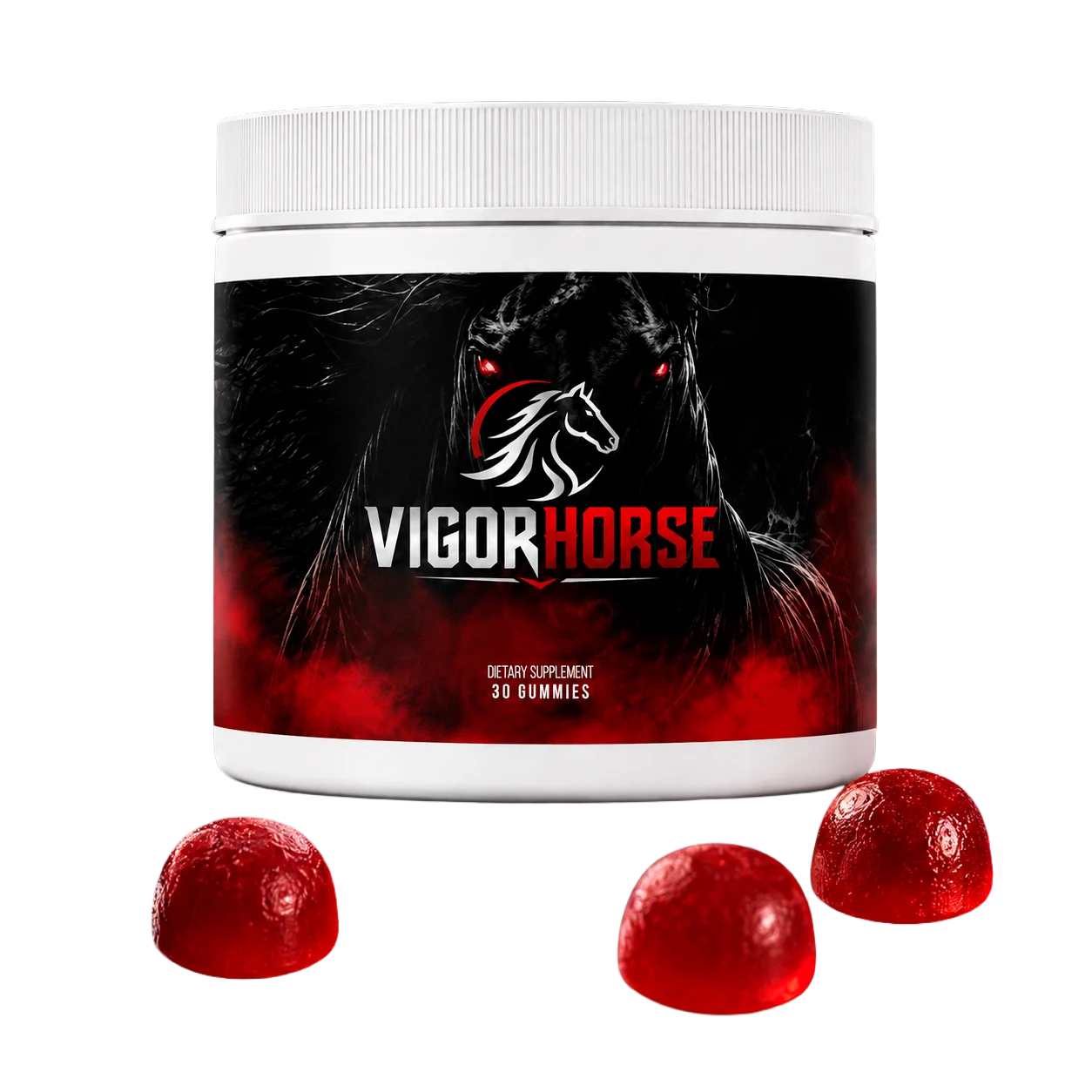
Where VigorHorse sits against everything on this page
Nine of these names share one 82 mg blend line, and the panel prints an amount for one of them. The ingredients page sets each name beside the dose its own research used.
One bottle $89 · six bottles $294 · 60-day money-back guarantee
Order VigorHorse On The Official WebsiteOne gummy a day · 30 per jar · lot VIG-26/GO-6654