VigorHorse Official Website › Blog › What Catuaba Actually Is
What “Catuaba” Actually Is
This label prints “Catuaba Extract” and nothing else — no Latin binomial, no species. That is not this seller cutting a corner; it is standard for the category, and it matters because catuaba is not one plant. A peer-reviewed paper on commercial catuaba samples says so directly, and the pharmacology behind the name traces to a plant most labels never specify.
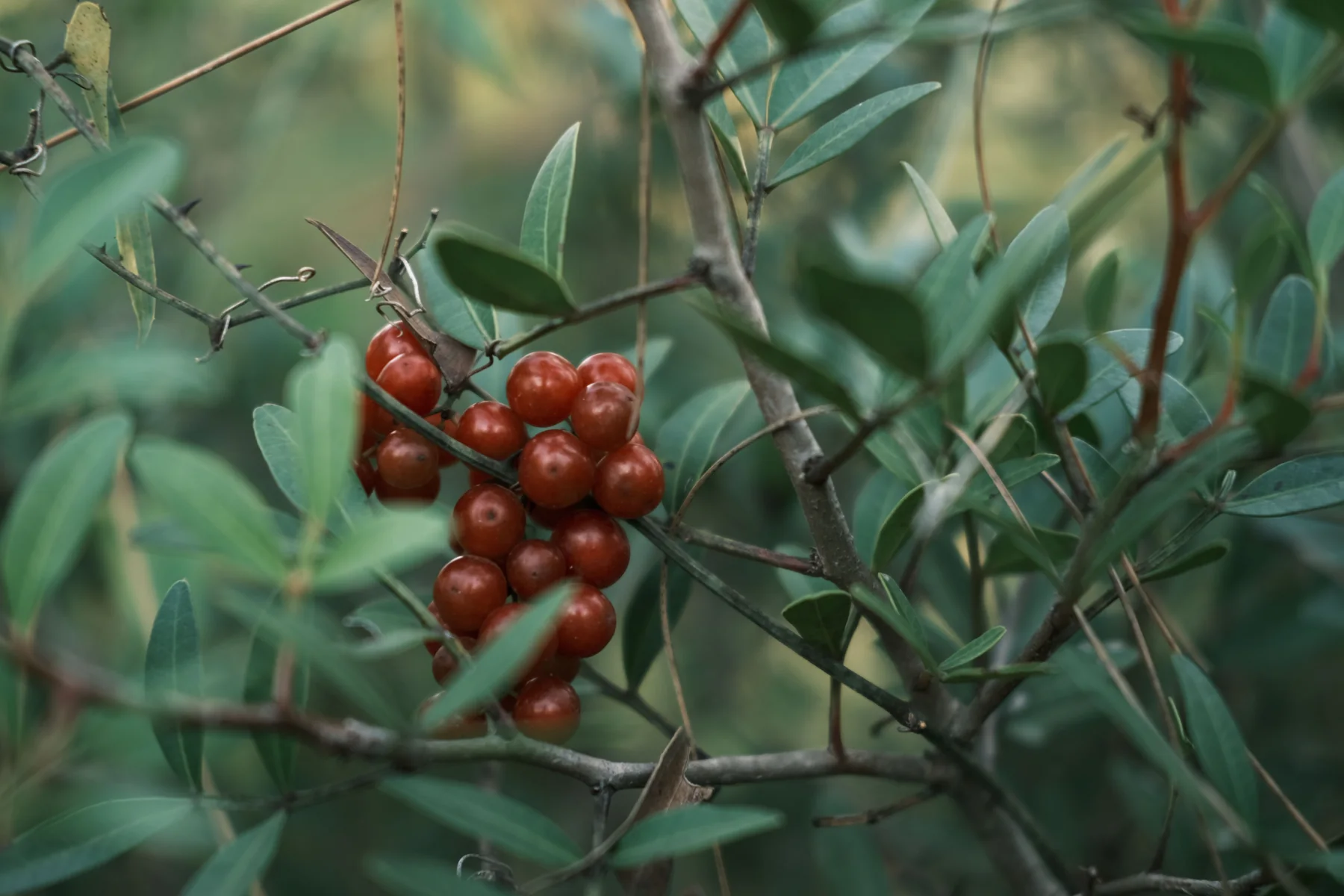
- “Catuaba” is a Brazilian common name, not a species. The official pharmacopeia species is Anemopaegma arvense, but Trichilia catigua and Anemopaegma mirandum are both sold under the same name.
- A 2008 chemistry paper built an NMR- and HPLC-based classification method specifically because commercial catuaba samples could not be reliably sorted by eye, and it found real chemical differences between them.
- Trichilia catigua carries the most pharmacology: antidepressant-like effects in mice, an anticholinesterase and antioxidant profile, and an antifatigue effect, all preclinical.
- No published trial gives any of the three catuaba species to a human being and measures a sexual or vitality outcome.
- VigorHorse's own label does not name a species, which is ordinary for the category and also means this identity question cannot be settled from the bottle alone.
Not one plant, and the paper that proves it
Checking a sales claim usually starts with the ingredient name. Catuaba is the case where the name itself is the first thing worth checking, because it does not map cleanly onto one species the way almost every other name on this label does.
Daolio and colleagues (2008) state the problem in their own introduction: “For over a century, Catuaba has been used in Brazilian folk medicine as an aphrodisiac even though the identity of the plant material employed is often uncertain. The species recommended by the Brazilian Pharmacopeia is Anemopaegma arvense (Bignoniaceae), but many other plants, regionally known as Catuaba, are commercialised.”
That sentence, from a peer-reviewed analytical chemistry paper rather than a critic of the category, is the whole finding in miniature. The researchers went on to build a proton NMR and HPLC method, paired with multivariate statistics, specifically to classify commercial catuaba samples by their actual chemical profile rather than trust the label. A method like that gets built because the labels were not sufficient on their own.
| Plant sold as catuaba | Family | Standing |
|---|---|---|
| Anemopaegma arvense | Bignoniaceae | Named as official catuaba by the Brazilian Pharmacopeia |
| Trichilia catigua | Meliaceae | Most commonly studied species in the modern pharmacology literature |
| Anemopaegma mirandum | Bignoniaceae | A separate species, commercially sold under the same folk name |
Trichilia catigua: the species with a research trail
Nearly every pharmacology paper on catuaba published in the last two decades studied Trichilia catigua specifically, not the pharmacopeia's official Anemopaegma arvense. That is worth flagging on its own: the plant most likely to be behind a "catuaba" ingredient line in a modern supplement, going by which species researchers actually work with, may not be the one with the official designation.
| Study | Year | Model | Result |
|---|---|---|---|
| Campos and colleagues | 2005 | Mice and rats, forced swim test | Antidepressant-like effect; evidence for a dopaminergic mechanism |
| Chassot and colleagues | 2011 | Mice, behavioral screen | Preclinical CNS profile established; single-dose anxiolytic effect not confirmed |
| Bonassoli and colleagues | 2012 | Mice, 14-day dosing | Antidepressant-like effect sustained with repeated dosing, with increased hippocampal cell proliferation |
| Bernardo and colleagues | 2018 | In vitro, CNS targets | Multiple CNS-relevant activities identified in the bark extract |
| Martins and colleagues | 2018 | In vitro and mice | Antioxidant, anticholinesterase, and antifatigue effects |
Five studies, one Brazilian research group centred at the State University of Maringá, none testing a sexual or libido endpoint.
The word the papers use, and what they tested instead
The papers themselves do not hide the traditional claim. Chassot and colleagues (2011) open their introduction by stating that Trichilia catigua preparations “have been popularly used in Brazil as a tonic for the treatment of fatigue, stress, impotence, and deficiency of memory.” The same sentence, almost word for word, appears in the 2012 follow-up study. Impotence is named as a traditional indication in both papers' own background sections.
Then look at what each paper actually measured: the forced swim test and tail suspension test, both standard rodent screens for antidepressant-like behavior, plus, in one paper, hippocampal cell counts, and in another, a treadmill-style fatigue endpoint. Not one used any test of sexual behavior, hormone level, or erectile function. The traditional claim named in the introduction and the outcome measured in the results section are not the same claim, in five out of five papers on this species.
That gap is not unique to catuaba. It is the same pattern this website has flagged before on other ingredients, and it is worth naming plainly here because catuaba's version of the gap has an added layer: even if a reader accepts “preclinical evidence for mood” as a reasonable proxy for a modern update to a folk claim, that evidence belongs to Trichilia catigua specifically, and nothing on a typical label, including this one, confirms that is the plant inside the jar.
Where catuaba sits on the VigorHorse label
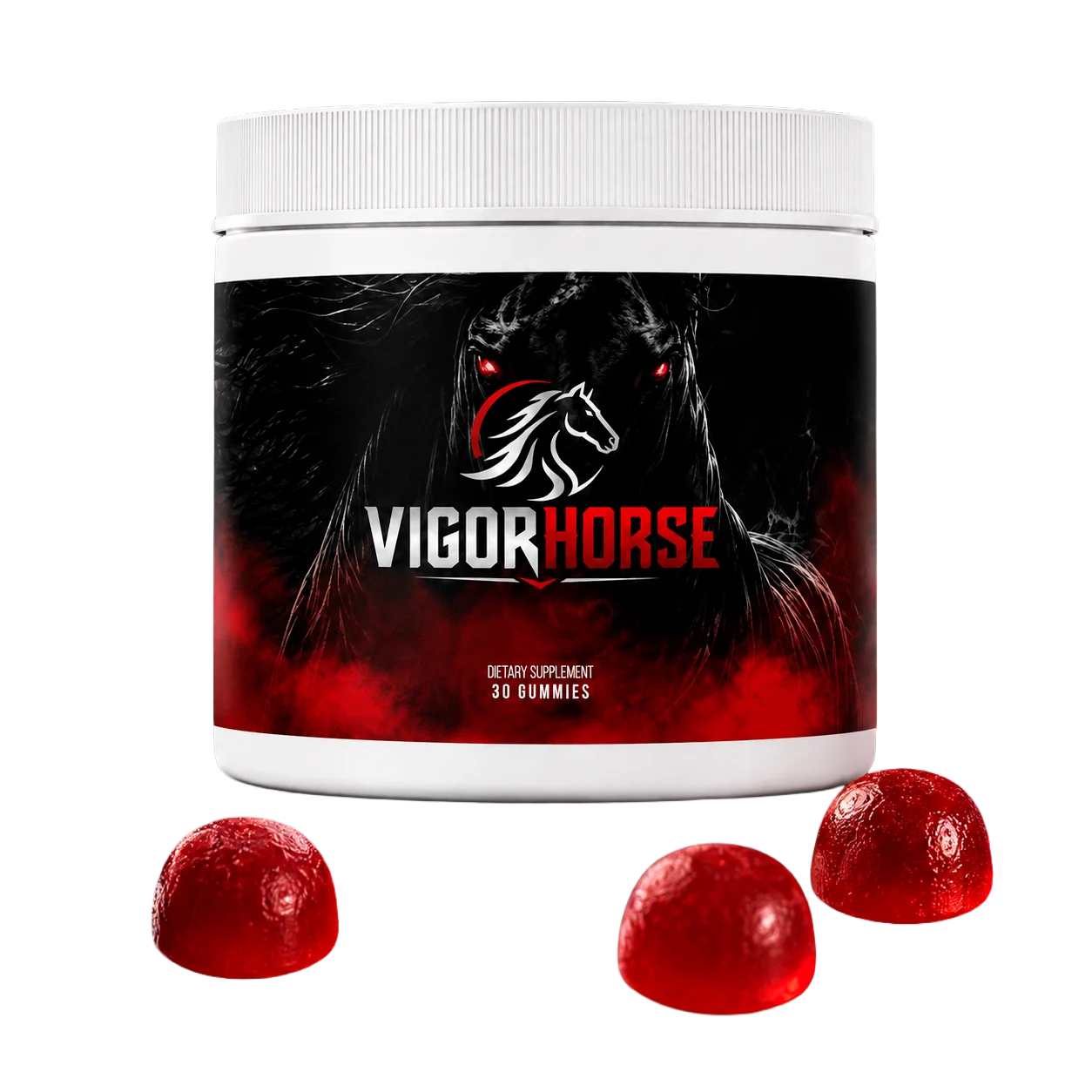
Third of 9 names on a single 82 mg blend line, with no amount and no species printed.
One bottle $89 · six bottles $294 · 60-day money-back guarantee
Order VigorHorse On The Official WebsiteOne gummy a day · 30 per jar · lot VIG-26/GO-6654
The pharmacopeia species, and the third plant
Anemopaegma arvense, the species the Brazilian Pharmacopeia actually names as catuaba, shows up in botanical and population-genetics literature but this page did not find a pharmacology study testing it against any behavioral or physiological endpoint. The plant with the official designation is, on the current published record, the least studied of the three for an actual biological effect.
Valverde and colleagues (2008) tested a third, separate species, Anemopaegma mirandum, in human neuroblastoma cells exposed to rotenone, a standard model compound for Parkinson's-disease-like cell death, and found a cytoprotective effect on cell viability and mitochondrial structure. That is a real, specific finding, for a third plant, on a neurodegeneration-relevant endpoint that has nothing to do with the vitality claim either.
Add it up and there is no version of “catuaba” whose modern pharmacology reaches a tested human sexual or vitality outcome. Three plants, three different bodies of evidence, and none of the three closes that gap.
Running the label check on this specific jar
VigorHorse's Supplement Facts panel prints “Catuaba Extract” as the third of nine names in its proprietary blend, in descending order of predominance: Muira Puama Extract, Maca Extract, Catuaba Extract, Green Tea Extract, Caffeine (5 mg), Ashwagandha, L-Arginine, Tribulus Terrestris, Horny Goat Weed Extract, all inside 82 mg. No Latin binomial appears anywhere on the label or on this seller's ingredients page.
That omission is not a red flag specific to this product. It is standard across the male-vitality gummy category, and most catuaba-containing supplements on the market today have the identical gap. It is worth stating here rather than leaving it implied, because a reader who wants to know precisely which of the three plants above is inside this jar cannot get that answer from the packaging, and neither could this page.
Where that leaves the dose question
Even setting the species question aside, the amount question runs into the same wall every other name on this blend line does. The total blend is 82 mg across nine names, footnoted as roughly equivalent to 567 mg of dry powders. Catuaba, third on the list, outranks six of the other eight names but has no individually printed figure. Caffeine is the only exception, broken out at 5 mg.
Two things would resolve both open questions at once: a label that names the species (Trichilia catigua, Anemopaegma arvense, or otherwise), and a milligram figure for that name specifically. Neither exists on this jar, which is not unusual for the category, and is exactly why this page checked the underlying literature instead of taking the ingredient name at face value.
What to take from all of this
- "Catuaba" is a trade name for at least three different plants, by the field's own published admission, not a single, settled species.
- Trichilia catigua has the strongest research trail, and it is preclinical mood and cognition research, not a sexual-function study.
- The word "impotence" appears in the traditional-use background of these papers and has not been the tested outcome in any of them.
- A published chemistry method exists specifically because commercial catuaba samples vary, which is independent confirmation the identity problem is real, not a theoretical concern.
- This label, like most in the category, does not name a species, so the identity question this page raises stays open for any catuaba-containing product, not just this one.
None of this means catuaba is a bad-faith ingredient to put on a label. It means the honest one-line description is longer than the marketing version: a Brazilian folk name for more than one plant, the best-studied of which has real rodent evidence for mood, with no species specified on this bottle and no human trial behind the claim it is actually sold on.
References
- Daolio C, Beltrame FL, Ferreira AG, Cass QB, Cortez DA, Ferreira MMC. Classification of commercial Catuaba samples by NMR, HPLC and chemometrics. Phytochem Anal. 2008;19(3):218-228. PMID 17890569. https://pubmed.ncbi.nlm.nih.gov/17890569/
- Campos MM, Fernandes ES, Ferreira J, Santos AR, Calixto JB. Antidepressant-like effects of Trichilia catigua (Catuaba) extract: evidence for dopaminergic-mediated mechanisms. Psychopharmacology (Berl). 2005;182(1):45-53. PMID 15991001. https://pubmed.ncbi.nlm.nih.gov/15991001/
- Chassot JM, Longhini R, Gazarini L, Mello JC, de Oliveira RM. Preclinical evaluation of Trichilia catigua extracts on the central nervous system of mice. J Ethnopharmacol. 2011;137(3):1143-1148. PMID 21801825. https://pubmed.ncbi.nlm.nih.gov/21801825/
- Taciany Bonassoli V, Micheli Chassot J, Longhini R, Milani H, Mello JC, de Oliveira RM. Subchronic administration of Trichilia catigua ethyl-acetate fraction promotes antidepressant-like effects and increases hippocampal cell proliferation in mice. J Ethnopharmacol. 2012;143(1):179-184. PMID 22728168. https://pubmed.ncbi.nlm.nih.gov/22728168/
- Bernardo J, Ferreres F, Gil-Izquierdo Á, Videira RA, Valentão P, Veiga F, Andrade PB. In vitro multimodal-effect of Trichilia catigua A. Juss. (Meliaceae) bark aqueous extract in CNS targets. J Ethnopharmacol. 2018;211:247-255. PMID 28970152. https://pubmed.ncbi.nlm.nih.gov/28970152/
- Martins NO, de Brito IM, Araújo SSO, Negri G, Carlini EA, Mendes FR. Antioxidant, anticholinesterase and antifatigue effects of Trichilia catigua (catuaba). BMC Complement Altern Med. 2018;18(1):172. PMID 29866157. https://pubmed.ncbi.nlm.nih.gov/29866157/
- Valverde G De Andrade D, Madureira de Oliveria D, Barreto G, et al. Effects of the extract of Anemopaegma mirandum (Catuaba) on Rotenone-induced apoptosis in human neuroblastomas SH-SY5Y cells. Brain Res. 2008;1198:188-196. PMID 18241847. https://pubmed.ncbi.nlm.nih.gov/18241847/